Standard
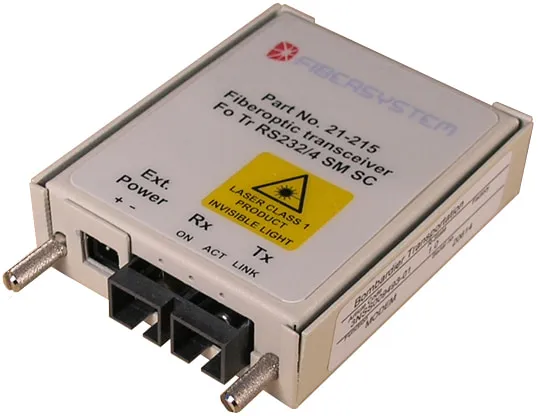
Fiber Optical Transceiver RS-232/422 D-sub
- Wavelength
- 1310 nm
- Connector
- SC
Product no 60-00-7753 (21-215)
Public and private sector
The operator’s later cross-connects eat your budget after handover, which is why the acceptance measurement matters.
The problem
Two buildings never share an earth potential. And the cable passes ground that somebody else owns and can dig in.
Two things are usually missed. The fiber is leased, which means it is measured by somebody else, with somebody else’s reference and somebody else’s conditions — ask for an OTDR record and a two-way attenuation measurement at handover, not a datasheet. And the ODF is usually not yours: every time the operator re-patches in their own frame, connector pairs are added to your budget without you being told. Size for that.
How it is built
Where the isolation boundary sits is a design decision, not an installation detail.
See the full patternIn the catalogue
Built from: Fiber Optical Transceiver RS-232/422 D-sub 60-00-7753 (21-215), Data Diode Secure 1 Gbit SM 60-00-8362 and Fiber Optical Converter IEEE C37.94 MM/SM 60-00-5593 (21-203).
Standard
Product no 60-00-7753 (21-215)
Standard
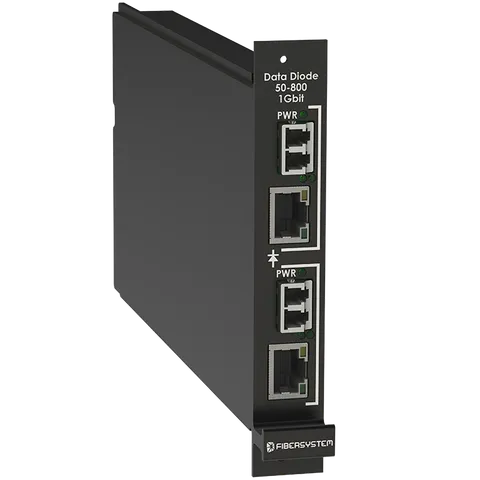
Product no 60-00-8362
Standard
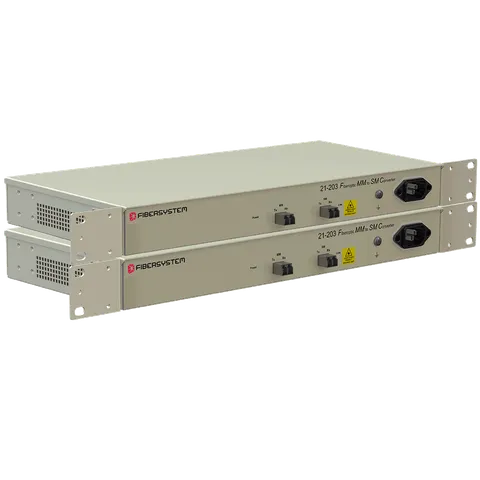
Product no 60-00-5593 (21-203)
Reading and references
Named customer references are not published. What we can show is the solution area this environment belongs to, and the reasoning behind the design.
Environments
The technology is the same; the buying process usually is not.

Next step
If yours is close to this one but not the same, that difference is usually where the design decisions are. Tell us what it looks like.
Verified credentials
All certifications