Pattern FO-C
Galvanic barrier and cross-connect inside the site
Where the isolation boundary sits is a design decision, not an installation detail.
- Area
- Fiber & OT
- Environments
- 5
- Products used
- 3
How it is built
Used in these environments
- Railway signalling installationVibration and a 40-year installation lifetime set the requirements, not the data rate.
- Process industryGround potential differences across a site are what break copper, and what fiber removes.
- Hospital: isolation near medical equipmentLeakage current, not data security, is the driver — and the catalogue answers for the technical room, not the patient-adjacent side.
- Link between buildings over public landThe operator’s later cross-connects eat your budget after handover, which is why the acceptance measurement matters.
- Vehicle and vessel installationThe rugged data diodes carry 810G and 461 data; no converter, extender or switch in the catalogue does.
How it works
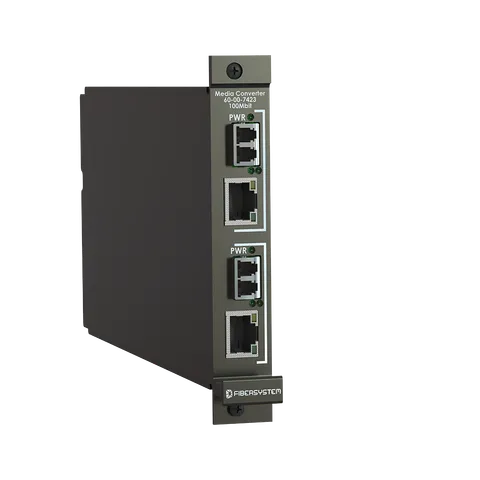
Fiber between two buildings or two systems removes the conducting path between them. Copper on each side, light in between.
Where the boundary sits is a design decision
Put the converter in the wrong place and the copper run that was supposed to end continues past the barrier. The boundary belongs at the point where the potential difference is, which is usually a building entry and rarely a rack.
Isolation is not separation
Two networks joined by a fiber converter are still joined. The barrier removes an electrical path; it removes nothing logical. Confusing the two is the most common mistake in this pattern.
In the catalogue
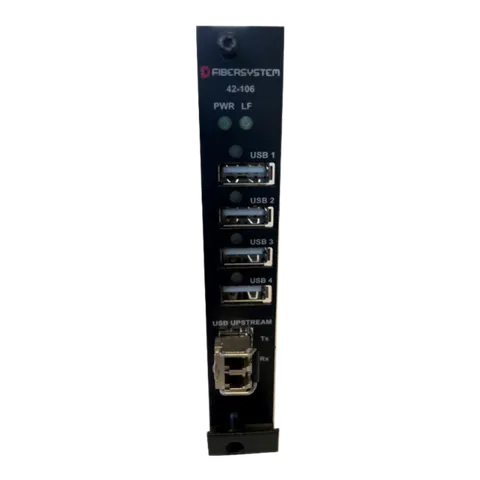
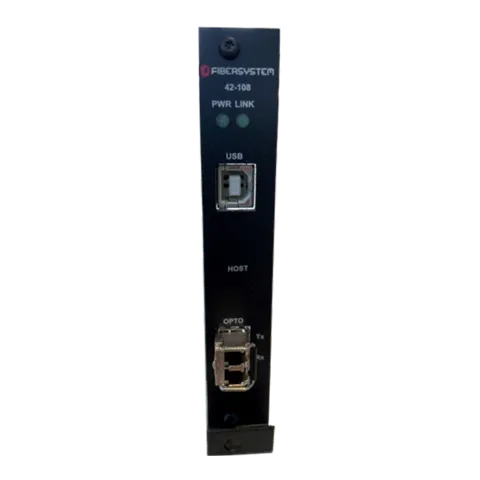
Equipment from the catalogue
Next step
Designing something that is not here?
Send us the constraints. We build from idea to certified end product, and most of what is in the catalogue started that way.
Verified credentials
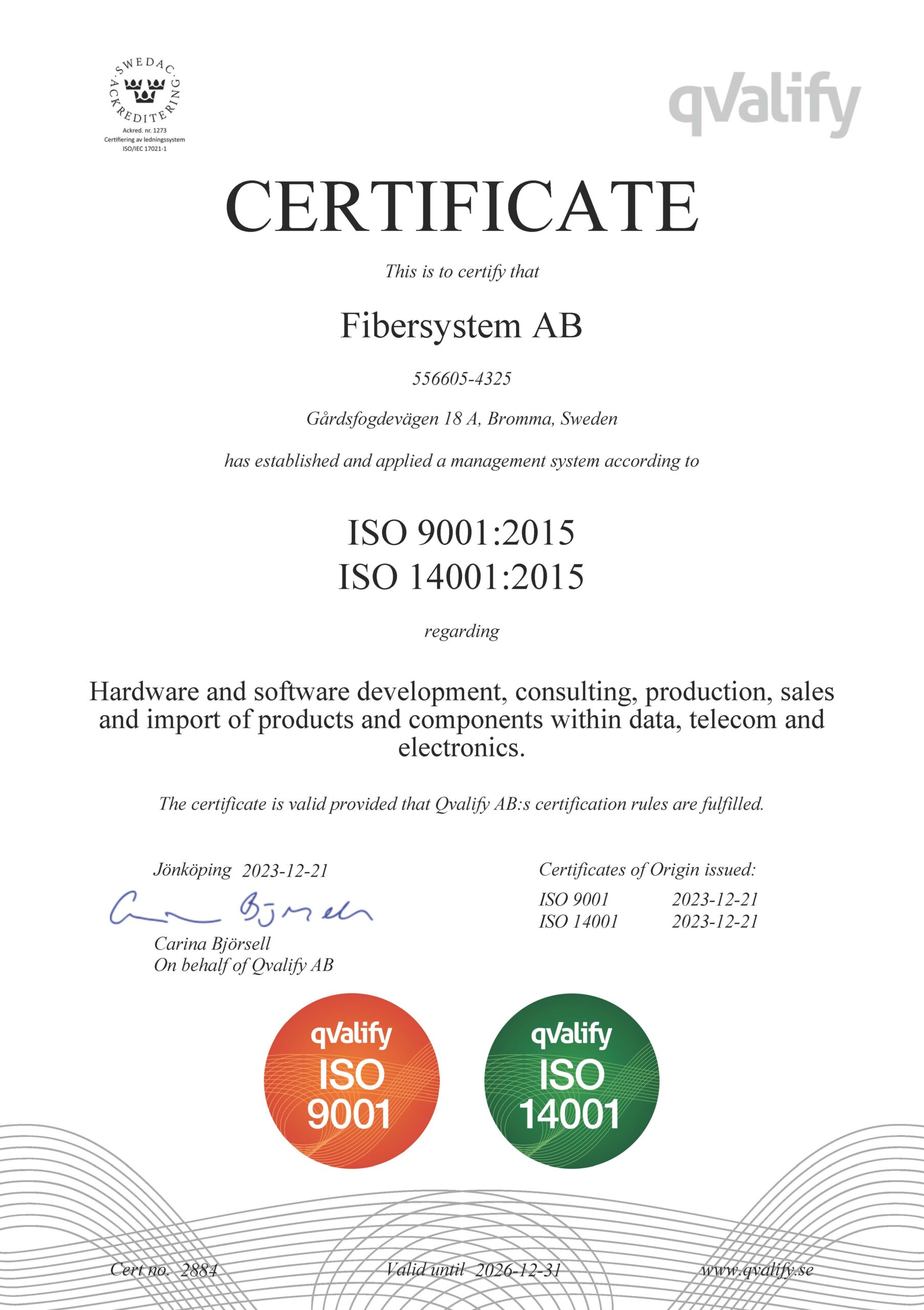
All certifications- ISO 9001 14001ISO certifiedQuality & environmentDownload certificate (JPG)
- Made in SwedenDesigned & built in StockholmSecure supply chain

- NATOCertified TEMPEST supplierSDIP-27 · Level A & B

- Swedish Armed ForcesM-numbered equipmentMain supplier, Total Defence

- Government of SwedenSupplier to Swedish authoritiesPolice · FMV · FOI

- SOFFDefence industry memberExport control frameworks