Application areas
Protect industrial & OT networks
Hardware-enforced protection for power grids, railways and industrial control systems: data diodes, teleprotection links and hardened fiber communication.
- Products used
- 5
- Examples
- 3
Attacks on critical infrastructure are daily operations, often state-sponsored. Operational technology such as power grids, railways and water treatment needs protection that software alone cannot provide.
The application
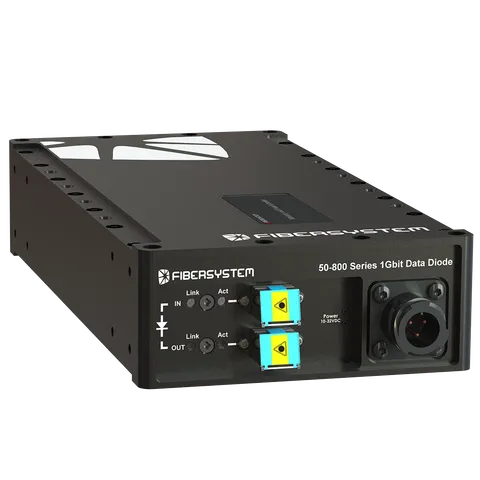
Data diodes let process data flow out of the control network while making inbound attacks physically impossible. IEEE C37.94 and G.703 converters provide galvanically isolated teleprotection between substations, and rugged variants withstand harsh field environments.
Typical deployments: substation teleprotection, one-way export from SCADA/ICS, isolated links across industrial sites. Operators using the equipment include Svenska Kraftnät, ABB and Alstom.
Where it is used
Substation with teleprotection
Delay and channel asymmetry decide whether the protection trips correctly, because the link is part of the protection scheme.
During an earth fault one substation’s earth potential rises relative to another by kilovolts for a few tens of milliseconds. A copper link between the substations then has that difference across it, at exactly the moment the protection has to send its trip command. Fiber removes the galvanic path rather than attenuating the problem.
Three things at once: 200 mm cabinet depth, which the catalogue is built for and general 19-inch equipment is not; auxiliary power at 110 or 220 V DC from a battery bank rather than 230 V AC, which the catalogue’s 48–250 VDC range covers; and a documented EMC environment at IEC 60255 level rather than EN 61000-6-2 level. A converter built for an office does not meet this.
Switching station with SCADA release
Measurements must leave the station without opening a way back in.
The control centre needs measurements and alarms from the substation. The substation’s control system must not be reachable from the office network. Fiber provides both the galvanic barrier against the switchgear and the carrier for a one-way release.
The diode card and the converter card share a chassis. That is convenient and it is a risk: an unplanned copper patch between two cards in the same rack can bypass the entire one-way barrier.
Water treatment and distribution
The distances between pumping stations are set by geography, and the budget has to be calculated rather than assumed.
Pumping stations, booster stations and reservoirs are spread out, often in their own buildings with their own earthing, and often with variable frequency drives on the pump motors. A VFD is one of the worst sources of interference in ordinary industry, and an RS-485 or Ethernet cable between two buildings with separate earths is a classic source of “intermittent faults that look like software faults”.
How it is built
One-way release from OT, with a controlled return
Out is the default. Anything coming back is a separate link with its own approval.
- One-way path
- Data path
- Path that does not exist
Recommended products
Products for this application
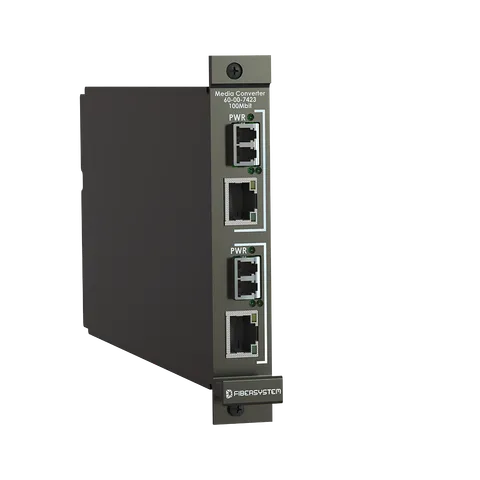
Standard
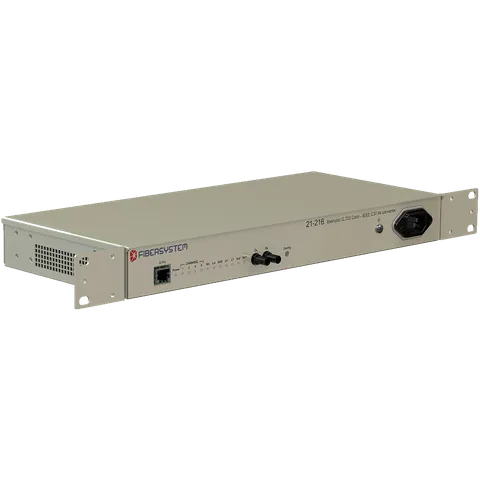
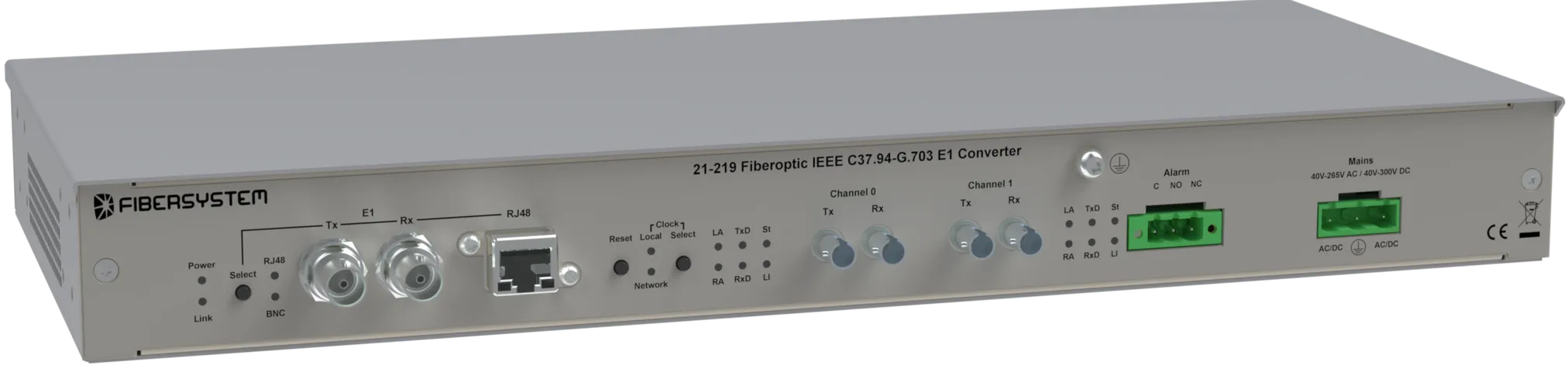
Fiber Optical Converter IEEE C37.94 – G.703 E1
- Wavelength
- 820nm
- Fiber optic connector
- ST
- Connector
- Terminal Block, 3-pin
Product no 60-00-9166 (21-219v2)
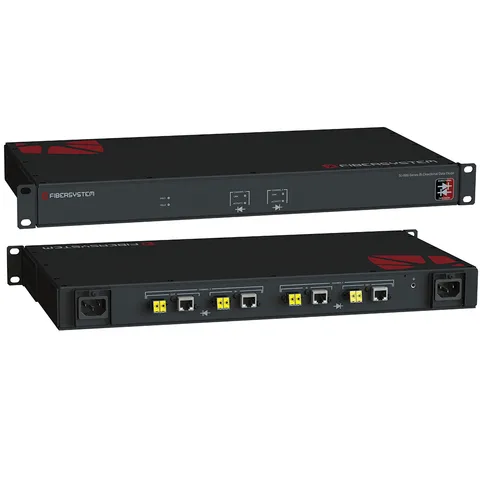
Browse the full range:Data Diodes → · Industrial Converters and Extenders →
Next step
Application not on the list?
If the environment you need to secure looks different, our custom development takes it from idea to certified end product.
Verified credentials
All certifications- NATOCertified TEMPEST supplierSDIP-27 · Level A & B

- Swedish Armed ForcesM-numbered equipmentMain supplier, Total Defence

- Government of SwedenSupplier to Swedish authoritiesPolice · FMV · FOI

- ISO 9001 14001ISO certifiedQuality & environmentDownload certificate (JPG)
- SOFFDefence industry memberExport control frameworks

- Made in SwedenDesigned & built in StockholmSecure supply chain