TEMPEST Level A · RÖS U1
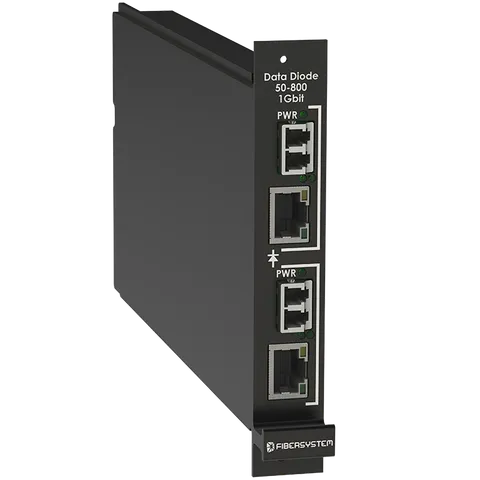
Data Diode Secure 1 Gbit MM TEMPEST
- Data rate
- 1 Gbps
- Wavelength
- Multimode 850 nm
- Input, LC
- 1000 BaseSX
Product no 60-00-7303
Pattern DD-D
The diode controls direction; the release decision controls content — and they are different mechanisms.
How it is built
A document leaves a higher domain for a lower one. The diode enforces the direction; the release decision governs the content. They are different mechanisms and both are required.
Automate it and it becomes a rule — and a rule can be wrong in ways a person is not. The decision needs a mandate, a record and a name. Where the volume makes that impractical, the answer is to reduce what crosses, not to automate the judgement.
Nothing. There is no query, no confirmation and no way for the low side to ask the high side for a correction. Publishing that assumes a feedback loop has to be redesigned before it meets the boundary, not after.
In the catalogue
TEMPEST Level A · RÖS U1
Product no 60-00-7303

Next step
Send us the constraints. We build from idea to certified end product, and most of what is in the catalogue started that way.
Verified credentials
All certifications